At the Water
“So he brought the troops down to the water, and the LORD said to Gideon, ‘Separate those who lap the water with their tongues like a dog from those who kneel to drink.’” — Judges 7:5 (BSB)
There are moments in Scripture that become even more astonishing when modern knowledge catches up to them.
One of those moments is hidden in the story of Gideon and the 300 men chosen by God.
For thousands of years, people read the phrase “lapping like a dog” without fully understanding how remarkable that comparison really was. Scientists have only recently started to grasp how dogs drink water. Around 2010–2011, researchers using high-speed cameras discovered something the human eye could barely detect.
Dogs do not simply scoop water into their mouths.
They strike the water with speed and precision, curling the tongue backward to pull a column of water upward. Then, before gravity collapses it, they catch and swallow the rising water.
It happens incredibly fast—too fast for ordinary observation.
And what makes this astonishing is that God referenced this exact image thousands of years ago. Not after scientific discovery, but in ancient times, when He separated 300 men from thousands by comparing their posture to the way a dog drinks.
That should make us pause. Because if God used that image so specifically, perhaps there was something in that posture He wanted us to see.
Not merely how they drank. But how they lived.
Need Is Not the Problem
The men who came to the water were all thirsty, and this matters. Because God is not condemning human need. The body requires food, rest, sleep, work, and care. Even Jesus ate, slept, withdrew, and rested.
The issue was never the existence of need. The issue was surrender.
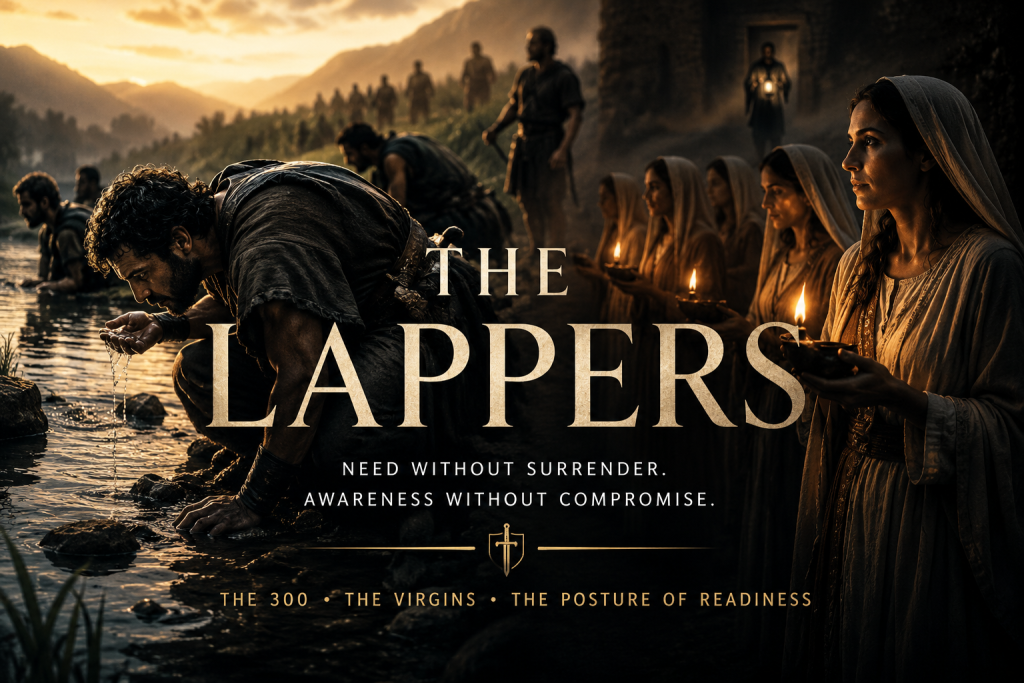
Some men fell fully to their knees and gave themselves over to the moment. Their posture changed completely. Their awareness lowered. They became absorbed in satisfying themselves.
But the others drank differently.
They took what was necessary while remaining aware. Like the dog striking the water quickly and lifting it upward, they did not settle into comfort. They satisfied a need without surrendering themselves to it.
The image carries spiritual weight.
The 300 still drank. Yet their needs did not dictate their posture. They remained attentive. This is the difference between discipline and indulgence. A disciplined person meets a need. An indulgent person is lost in it.
Speed and Awareness
What scientists discovered about dogs drinking water involves two things:
Speed and awareness.
The movement must happen quickly for the water to rise. The dog cannot linger too long in the act. The motion is efficient and controlled.
Spiritually, the image becomes powerful. The 300 faced the same thirst as everyone else. But thirst did not master them. They drank while remaining focused. Their hands stayed near their weapons. Their minds remained alert.
They enjoyed what was needed without becoming absorbed in it. And that may be one of the quiet tests of spiritual maturity: Not whether you have needs—but whether your needs rule you.
Building With One Hand, Fighting With the Other
There is another image in Scripture that reflects this same posture.
When the people rebuilt Jerusalem’s wall in the days of Nehemiah, they worked while remaining armed:
“With one hand they performed the work, and with the other they held a weapon.” — Nehemiah 4:17 (BSB)
Many spiritual struggles don’t start with defiance. They begin with complacency. A person gradually lets their guard down. Prayer becomes a choice. Discipline wanes. Indulgence grows. Awareness fades. Eventually, the soul is not ready for unexpected challenges.
The men kneeling by the water weren’t evil. However, their posture revealed a truth: that their bodies and desires, not their free spirits, were in control of their hearts.
Ready at Midnight
Jesus taught this same truth in the parable of the ten virgins.
The foolish virgins thought readiness was a moment. They believed they were prepared because their lamps were lit. All ten virgins responded to the need to rest their bodies. However, the wise ones gave up comfort before rest. They got oil and filled their lamps first.
The Quiet Formation No One Sees.
Most of us are not standing beside a battlefield or waiting with lamps at midnight. Our testing happens quietly—in comfort, appetite, entertainment, routine, and distraction. It happens while eating, browsing, resting, working, or seeking relief from exhaustion.
Scripture does not teach that these things are evil. Life contains many good gifts meant to be enjoyed. The issue is not enjoyment.
The issue is mastery.
The 300 drank water. The wise virgins rested while waiting for the bridegroom. Nehemiah’s builders still worked, ate, and lived ordinary lives.
A warrior mentality does not reject life. It simply refuses to surrender awareness to it. This is where many battles are quietly won or lost.
It is how long we stay in places we no longer need to be. How much we continue eating after we are full. How long we browse, scroll, play, or distract ourselves without being able to stop.
These moments don’t feel like preparation. But they shape something inside you. This shaping leads to discipline or indulgence. Over time, this quiet pattern becomes your default response.
The mind whispers that we are in control. But over time, the things we repeat begin to shape us. And sometimes, the things we thought we controlled quietly begin controlling us.
The Warrior’s Posture
This challenges the way many people think. We often imagine we will rise in the important moment—that somehow pressure will produce a stronger version of ourselves. But Scripture repeatedly points in another direction: You do not suddenly become ready. No one transformed under pressure; they were uncovered by it.
A warrior remembers what others forget: our true enemy is darkness. It doesn’t pause for our needs, and it might even exploit those needs as a trick or deception to defeat us. Therefore, warriors must always remain vigilant.
That readiness reflects the warning later given in the Bible:
“Be sober-minded and alert. Your adversary, the devil, prowls around like a roaring lion, seeking someone to devour.” — 1 Peter 5:8(BSB)
The enemy is not always visible. The Scripture says the enemy hides, prowls, watches, and waits. That means readiness cannot be occasional. It must become a default way of life.
Watchfulness does not mean rejecting joy. We still eat. We rest. We work. We laugh. We enjoy life’s gifts. But inwardly, something remains guarded. A quiet awareness. A refusal to let anything take God’s place.
What Rules You?
Life has many responsibilities. We care for our families. We have work to do. We raise children. Bills must be paid. Our bodies get tired. Our emotions need rest. These things are not wrong.
Spiritual maturity isn’t about having no needs. It’s about refusing to let anything but God rule us. The Apostle Paul wrote:
“Everything is permissible for me, but not everything is beneficial. Everything is permissible for me, but I will not be mastered by anything.” — 1 Corinthians 6:12 (BSB)
Perhaps that is what separated the 300 from the thousands.
Not perfection or superiority. But mastery.
The ability to enjoy what was necessary without becoming ruled by it. To drink at the water without losing awareness. To rest without falling asleep spiritually.
To live fully in the world while remaining inwardly free.